A note from the Director
Small is beautiful!
– Ernst Friedrich Schumacher (1911-1977)
The way artificial intelligence (AI) is handled and deployed in the economy is far from ideal: there is surveillance and spying on users, data collection, manipulation, the creation of precarious working conditions, rigorous tech optimism, and blind faith in progress, to name just a few of the existing undesirable developments and harmful ideas of AI pioneers. To overcome these problems, we need a redistribution or, to be more precise, division of economic power in AI markets as well as a new narrative. We need nothing less than an Ethical Capitalism in the age of AI. The AI Startup Center by Technopark Zurich, which I founded and have been managing, is a response to this demand.
The actions of AI startups are particularly well suited to dispelling the supposed antagonism between ethical discourse and economic activity. Unlike other companies, especially large corporations, the actions of startups (and AI startups in the AI environment) are particularly oriented toward both economic and moral goals. At first glance, it may appear that startups, unlike other forms of organization, do not have the time or resources to consider ethics and questions of moral good and evil because they are particularly sensitive to market pressures. However, the opposite is true.

Christian Hugo Hoffmann
Director AI Startup Center
Where, as the great economist Joseph Schumpeter already pointed out, large companies are generally enormous, bureaucratic, and anonymous entities, where there are no clearly identifiable owners and customers are known only by hearsay, startups are “close” to the needs and problems of society and the economy. Startup entrepreneurs are not just a small cog in the big wheel of a corporation, where, to put it somewhat exaggeratedly, employees are perhaps more oriented toward their managers and their ideas of targets and KPIs than toward the company’s customers in the market. A bubble phenomenon, which is nicely encapsulated in Milton Friedman’s mantra: “The business of business is business” or, as I would put it: a triad of arbitrariness.
In a startup, on the other hand, everyone is dependent on finding out exactly what customers want and how this can be delivered in order to succeed in the market. Unmet needs and problems in society that are identified by startup entrepreneurs are, in fact, the classic starting point for founding a company – not the supposedly superficial desire to simply earn a lot of money, for which alternative career paths are more suitable because they involve much less uncertainty. After all, the vast majority of startups fail on their way to profitability, but imitators and successors benefit from the groundwork laid by others. Through the experiments and trial and error of others, new startup entrepreneurs can learn what works in the market and what does not.
Startups enable greater decentralization and diversity, offering genuine choices between different models. An economic system that relies on startups has many small entities competing healthily with each other, rather than a few large players. In this respect, decentralization would be achieved. Diversity and genuine choice come into play because startups, as micro-entities, allow for genuine negotiation per unit among employees on issues such as values, culture, KPIs, business purpose, perspectives in stakeholder dialogue, etc. In small, stable groups, which is what startups are at the end of the day, these negotiations are relatively successful. And since people differ in their views and values, the results of these negotiations will vary. Customers, talent in the labor market, and others can then choose from a variety of positions on these issues, not only in terms of the products and services offered by the respective startups on the market, but also in terms of corporate values, corporate culture, etc.
If we want to avoid powerful BigTech plutocrats imposing their visions on us, we must find ways to counter their influence with many alternative and diminished sources of power and counter their self-interest with an inclusive vision. Let AI technologies significantly expand humanity’s possibilities, but this will only happen if we put these AI tools at the service of people. This requires us to question the worldview of the leading minds in the global tech industry. The best way to challenge this is for many small AI startups to present us with tangible alternatives and credibly advocate for them, for example, by favoring technologies and approaches that can create new, wellpaid jobs for workers rather than indulging solely in automation. Or instead of seeking to replace existing human labor entirely with AI-powered machines for certain tasks – for example, in customer service, where a chatbot replaces or at least marginalizes the call center with humans, with questionable results for service quality – the new or alternative concern could be to enhance the quality of existing human work for the workforce or to initiate a positive cultural change towards greater transparency.
This does not automatically make startup entrepreneurs good people, of course not. They are not determined to be good. There are also corrupt or exploitative startup entrepreneurs. The fact that being a startup entrepreneur is linked to a high level of motivation to solve social problems, which is morally good or progressive, is not a statement which is worth of being empirically questioned – as is well known, there are a lot of black sheep in all fields, including AI startups. In my opinion, the most important arguments against the fetishism of BigTech are analytical. For example, a compelling argument arises from the laws of economics, and in particular the law of marginal utility. According to this, an increase in the number of employees, sales volume, power, or any other element does not result in (proportionally) greater productivity, nor does it automatically lead to greater satisfaction of needs in society. Performance in a company does not grow indefinitely with the size of the company.
In other words, the optimum is certainly always less than the maximum. Speaking of productivity, it is a common misconception that an increase in productivity inevitably leads to higher demand for labor. However, this is not true. A higher average production volume per employee does not necessarily give employers an incentive to hire more people. Companies are interested in something else: marginal productivity, i.e., the additional contribution that an additional employee will make by increasing the company’s production volume or serving more customers. And here, it may be the case – which applies more to large companies than to startups – that the production volume per worker increases while marginal productivity remains constant or even declines. We can illustrate the difference between production volume per worker and marginal productivity using the following prediction, which is usually attributed to Warren Bennis: “The factory of the future will have only two employees: a man and a dog. The man is there to feed the dog. The dog is there to keep the man from touching the machines.” That is why startups are the real job engines, increasing the marginal productivity of their workforce instead of (as promoted by BigTech) merely automating work and making workers redundant (e.g., when bookstores and booksellers are replaced by BigTech) or increasing surveillance (as in some warehouses, for example).
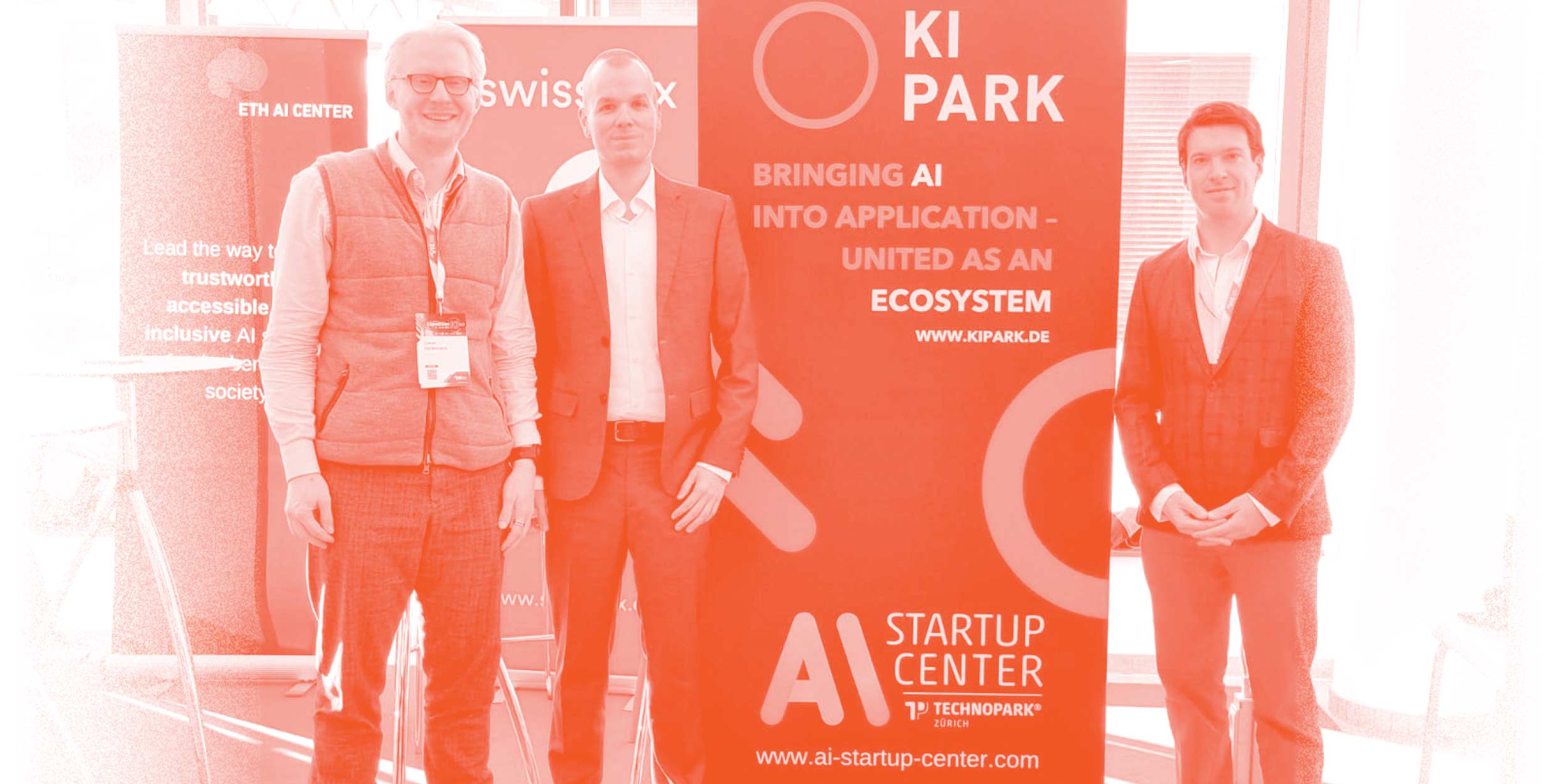
So if the AI startup world is a morally, economically, and socially better world than the current one with incumbents and BigTech, how do we achieve this new, desirable state? The liberal path I outlined with the AI Startup Center involves establishing a system of organizational units that are so small that the accumulation and condensation of collective power to the point of danger simply cannot occur. With great power comes great responsibility. Power implies responsibility, not exploitable superiority. If this great responsibility is not exercised – whether due to persons being overwhelmed or due to illegitimate denial of responsibility – then great power, and thus BigTech, should simply not exist. The answer, which is practically provided by the AI Startup Center, therefore does not lie in increasing the power of the state and regulator as a police force, but in reducing organizational size, whereby each and every one of us can ask ourselves whether we want to voluntarily support a system with proliferating BigTech players as talents or workers at their disposal, as well as in other roles, or not.
This also answers the question of what happens when startups are successful (although, as we know from statistics, the vast majority do not get that far) and could become the new generation of BigTech. After all, today’s BigTech companies also started out as startups. The new generation of talent and future workers is simply voting with their feet. This allows for an adequate response to the monopoly and growth aspirations of startups that wish to become giants. However, it would be presumptuous to believe that a simple, well-functioning mechanism has already been found. It remains to be seen how talent will decide in the labor market today and in the future. Will they be guided purely by monetary considerations, such as higher salary promises and supposed job security, toward BigTech, or will they make their decisions based on well and broadly informed, as well as, last but not least, ethical considerations? At least if the latter were the case, I would go so far as to say that, in a sense, they also deserve the system that is supported by their decision, one way or another. Against this backdrop, those who, like me, opt for small entities/startups but still have to struggle under the yoke of BigTech have a duty to continue to educate, launch campaigns, and set a broad-based movement in motion; this is also a key reason why this text was written.

Once again: The naive idea is therefore not that small entities, i.e., in our context, AI startups, would be saviors or morally good per se, or that ethical problems in dealing with AI would simply cease to arise once a system dominated by BigTech were replaced by a multitude of AI startups. This is precisely why I advocate elsewhere for concrete institutions that are attractive to startups, namely ethics trainings and ethics commissions, which can be used to better manage problems in developing and using AI. In the startup world (as opposed to the BigTech world), these problems are simply reduced to a manageable size. Leopold Kohr, the “philosopher of smallness,” puts it this way: “Instead of hopelessly trying to inflate the limited talents of humans to a size that can cope with enormous size, the enormous size should be reduced to a size that even the limited talents of humans can handle. In miniature, problems lose their horror and also their significance.”
We should leverage the strengths of startups for our economy and society today rather than tomorrow, to the fullest extent possible. In doing so, we should take care that entrepreneurs who are active and successful now and in the future do not revert to being merely passive capitalists, in order to avert the disastrous top dog economy, where Schumpeter’s creative destruction turns into destroyed creativity and thus prevents broader prosperity. There is no time to waste. The BigTech ideology that dominates our era carries with it the very real danger of becoming a self-fulfilling prophecy if human capabilities are disregarded, because automation decisions can gradually reduce opportunities for social contact, with all its potential. Without these opportunities, our human intelligence, which is situational and social, withers away, and conversely, AI technologies lack the social or situational intelligence of humans. Let us end with a message of hope: because we can want what we should not do, we are free. Humans are and will remain free, and so will the future of the economy, hopefully without BigTech and with several AI startup centers flourishing.
Yours truly,
Dr. Dr. Christian Hugo Hoffmann